News
Integrating Sensing, Processing and Precision in Modern Land Operations

Recent incidents in the Red Sea have highlighted how quickly multiple threats can develop, and how much pressure that places on detection, tracking, and decision making in real time.
This shift is being felt far beyond a single region. Across Europe, land programmes are being asked to deliver capability that’s not only effective in isolation, but reliable as part of a wider system, often under conditions where time, clarity, and confidence are limited. Detection is no longer the defining challenge it once was. The focus has shifted towards how these functions connect, feeding into a broader architecture that enables faster, more confident decision making without overwhelming the operator. This places equal importance on stabilisation, processing, data handling, and integration as it does on the sensing itself.
At the same time, the environments in which these systems operate are becoming more demanding. Contested and GPS-challenged conditions are no longer edge cases. They are increasingly part of the baseline. Generating reliable target data under these conditions is not straightforward. It requires a level of agility, precision and consistency that can only be achieved when sensing, mechanical performance, and processing capability are aligned from the outset.
This is reflected in the themes shaping Eurosatory. Multi-domain integration, remote engagement, land manoeuvre and air mobility all point towards the same underlying challenge: how to deliver capability that remains effective as complexity increases. The scale of the event itself mirrors that pressure. With continued expansion and a growing emphasis on operational realism, the focus is firmly on solutions that can perform in practice, not just on paper.
One of the less visible but equally important aspects of this shift is architectural. Defence systems are expected to remain in service for decades, yet the technologies that underpin them evolve far more quickly. Threats develop and evolve, sensors improve, processing capability advances, and software continues to expand in both scope and expectation. Designing systems that can accommodate that change without repeated redesign is now a fundamental requirement.
This is where modularity has moved from being a design preference to a practical necessity. Rather than treating each system as a fixed solution, modular architectures allow subsystems to be developed, validated, and refined independently, then integrated through clearly defined interfaces. That creates space for capability to evolve over time, whether through sensor upgrades, processing improvements, or new software functionality, without destabilising the wider system.
Alongside this, there is a clear move towards processing closer to the point of capture. Smaller, lower power modules are enabling video processing, detection, and classification to take place within or alongside the sensor itself, reducing reliance on centralised architectures and lowering the burden on wider system bandwidth. This shift towards distributed sensing and processing is changing how systems are designed, integrated, and deployed, particularly in environments where resilience and efficiency are critical.
These challenges are already being worked through across programmes, platforms, and operational environments. They are also reflected directly in the capabilities being developed and deployed.
At Eurosatory 2026, Chess Dynamics is showcasing a portfolio that has been shaped around these realities, bringing together sensing, processing, and precision positioning in configurations designed to reliably deliver critical capability under demanding operational conditions.
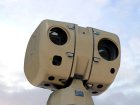
At the centre of this is the Hawkeye family of systems. Designed as modular, multi-sensor platforms, Hawkeye systems support surveillance, targeting and fire control across a range of land-based applications. The full-scale Hawkeye EOSS-D on display on stand D409 (Hall 5/5A) at Eurosatory provides long-range electro-optical surveillance and targeting capability, supporting detection, identification, and tracking of airborne, surface or land targets over extended distances in demanding conditions. This has been recently employed in a GBAD configuration.
Alongside this, Hawkeye MS and Hawkeye AD demonstrate how the same architectural approach can be adapted to different operational roles. Hawkeye MS brings together multi-sensor surveillance and targeting within a compact, flexible system, while Hawkeye AD is configured specifically to support ground-based air defence, where low latency detection and tracking are critical to precision control of the effector, whether that be hard or soft kill.
What underpins all of these systems is the ability to generate and maintain a flow of high-confidence target information. Achieving that consistently requires more than sensor performance alone. Stabilisation, mechanical precision, and processing all play a part in ensuring that the data operators rely on is accurate, repeatable, and usable in real time, particularly in environments where traditional reference points such as GPS may not be available.
Levels of accuracy like this are not assumed. They are increasingly being subject to formal performance assessment and validation as part of international programmes, reflecting the growing importance of trust in target data.
That same emphasis on reliable, actionable information sits behind Chess Dynamics’ Vision4ce technology. Acting as the intelligence layer within electro-optical systems, Vision4ce enables detection, classification, and tracking to take place as part of an integrated workflow. The use of advanced classification techniques reduces false positives, while DEFT tracking focuses processing on relevant regions of the image, enabling more stable and reliable tracking behaviour over time even when targets e.g. drones attempt to act evasively and camouflage themselves in cluttered backgrounds.
The continued evolution of the Vision4ce CHARM portfolio reflects this broader shift towards distributed processing. By enabling video data to be processed at or near the sensor, these modules reduce the need to transmit large volumes of raw data across the system, improving efficiency and supporting faster decision making. The introduction of increasingly compact, low-SWaP processing options extends this capability into more constrained environments, opening up new possibilities for integration within sensor payloads and compact platforms.
While sensing and processing often take centre stage, the electro-mechanical foundation that supports them is equally critical. Chess Dynamics’ DYNAXIS positioner portfolio provides the precision movement, control, reliability and stability required to ensure that sensors and payloads perform as intended.
Systems such as Cobra, Viper, Zeta, and the high-torque OMEGA positioner are designed to operate across land, maritime, and multi-domain environments, supporting payloads ranging from lightweight tracking sensors through to complex, high-mass RF and radar arrays. OMEGA, for example, delivers the mechanical strength and stability required to carry payloads of up to 500 kg, maintaining reliable and accurate performance under conditions such as vibration, wind loading, and platform motion.
This level of mechanical precision is not simply about movement. It directly affects sensing and targeting performance. Without stable, accurate positioning, even the most advanced sensor or processing capability cannot deliver reliable results. By treating positioning as an integral part of the system rather than a supporting function, Chess ensures that performance is maintained across the full operational chain.
This approach is reflected in how the positioner portfolio has evolved. Rather than being developed in isolation, these systems are engineered as part of a wider architecture, designed to support electro-optical sensing, tracking and targeting in real operational environments. This includes managing the practical challenges of payload integration, stabilisation under dynamic conditions, and consistent performance over time. These are areas where theoretical precision alone doesn’t translate into reliable performance.
The result is a family of positioners that are not only modular in design, but proven in application, supporting a wide range of payloads and platforms while maintaining the stability and control required for high-confidence sensing and targeting.
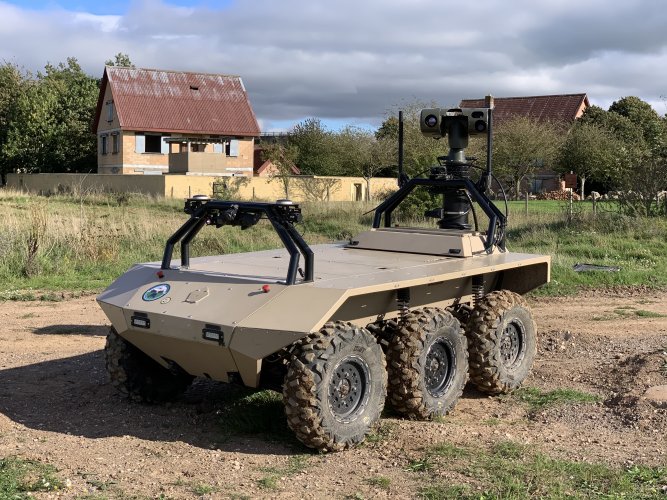
These capabilities are not presented in isolation. At Eurosatory, they will be shown as part of integrated configurations that reflect how they are deployed in practice. This includes containerised C-UAS systems and vehicle-based integrations combining the Modular Integrated Pod System (MIPS) and Hawkeye MS, demonstrating how detection, tracking, and response can be delivered across fixed, mobile, and rapidly deployable platforms.
Taken together, the systems on display provide a practical view of how modern defence capability is being shaped, not as a collection of individual technologies, but as an integrated, adaptable architecture designed to operate in complex and evolving environments. This is less about individual components and more about how those components perform together under operational conditions.
As Eurosatory continues to grow in both scale and relevance, it offers a timely opportunity to step back and look at how these challenges are being addressed. For Chess Dynamics, the focus is not on presenting isolated capabilities, but on demonstrating how those capabilities come together to support real-world outcomes, delivering performance that can be relied upon when it matters most.
This perspective is shaped through long-standing relationships with over 200 international customers and close collaboration with prime contractors, where the emphasis is not just on capability, but on how it integrates, performs, and endures over time. The systems are battlespace-proven over more than 25 years in conflicts across the globe.
Visitors to Hall 5A, Stand D409 in the UK Pavilion will be able to explore these systems in more detail and discuss how they are being applied across current and future programmes.
www.chess-dynamics.com
sales@chess-dynamics.com