News
ST Engineering - Powering Presence, Protecting the North

Advancing Arctic Capability: Canada’s Path to Mobility and Sovereignty
Once considered a distant and largely inaccessible frontier, the Arctic is now rapidly emerging as a critical arena for global competition and national security. With temperatures rising at nearly four times the global average, previously ice-bound routes are opening, revealing new shipping lanes and untapped natural resources. These developments are reshaping geopolitical dynamics and elevating the importance of sustained presence in the High North.
For Canada, this shift has sharpened the need for dependable, year-round operational capability in the region. Ensuring Arctic sovereignty now hinges on deploying systems specifically engineered to perform in some of the harshest conditions on earth.
DAME: A Strategic Enabler for Arctic Operations
At the heart of Canada’s response is the Domestic Arctic Mobility Enhancement (DAME) programme. More than a simple replacement for the aging BV206 fleet, DAME is designed to deliver a modern, scalable mobility solution that meets operational demands while supporting national industrial and alliance priorities.
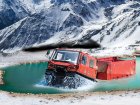
The programme envisions up to 170 amphibious, highly mobile vehicles capable of carrying a full infantry section and sustaining autonomous missions for up to 72 hours in austere Arctic environments. Rather than focusing on highly specialised configurations, DAME prioritises adaptability, durability, and consistent performance.
This creates a unique opportunity for industry to deliver not only vehicles, but a fully integrated solution that combines mobility, digital systems, mission capabilities, and long-term sustainment.
Engineering Mobility for Extreme Environments
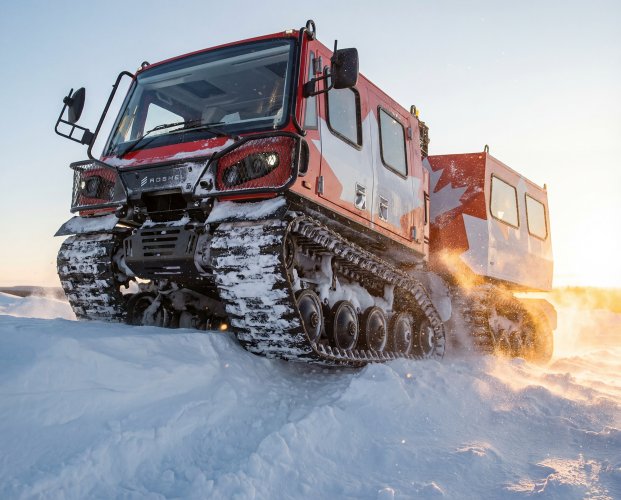
Operating in the Arctic requires more than rugged equipment—it demands platforms purpose-built for extreme cold, uneven terrain, and limited infrastructure. The ExtremV platform, assembled and integrated in Canada by Roshel, reflects this approach. Built on the proven Bronco articulated all-terrain vehicle lineage, it offers a dual-cabin design connected by an articulating joint, allowing enhanced traction and stability across snow, ice, muskeg, and soft terrain.
Its modular rear compartment supports rapid reconfiguration for multiple missions, including troop transport, command operations, logistics support, and medical evacuation. This versatility enables a single platform type to perform multiple roles while reducing logistical burden.
Cold-weather readiness is embedded as a baseline feature. Systems such as reliable engine cold starts, enhanced cabin heating, robust insulation, de-frosting capabilities, and hardened electronics ensure both operational reliability and troop safety during prolonged sub-zero deployments.
Digital Integration: Extending Capability Beyond Mobility
In the Arctic, mobility alone is not sufficient. Vast distances, sparse infrastructure, and limited communications require platforms to function as connected, intelligent nodes within a broader operational network.
ST Engineering contributes deep expertise in command-and-control systems, battlefield management, and secure communications. Through digital integration, platforms gain capabilities such as sensor fusion, real-time ISR feeds, and mobile command functionality—enhancing decision-making at the tactical edge.
Designed to align with NATO standards, these systems support interoperability with allied forces. Importantly, digital upgrades provide a cost-effective way to modernise capability without the risks often associated with large-scale procurement programmes.
From Platforms to Integrated Operational Systems
The demands of Arctic missions place a premium on endurance and independence. By integrating advanced mission systems—such as resilient power management, cold-adapted propulsion solutions, and beyond-line-of-sight communications—ST Engineering enhances the operational reach of mobility platforms.
When combined with C4ISR capabilities, vehicles such as the ExtremV evolve into more than transport assets; they become fully functional command-and-control nodes. This transforms the operational model from isolated vehicles to an interconnected system capable of supporting complex, distributed missions across the Arctic.
A Collaborative Industry Model
ST Engineering’s role within DAME is structured to complement Canadian leadership. Acting as a technology partner and systems integrator, the company focuses on mission modules, subsystem integration, and targeted upgrades to existing fleets.
This approach enables incremental capability enhancements while mitigating programme risks. By modernising legacy systems alongside new acquisitions, it supports operational continuity and maximises value for the Canadian Armed Forces (CAF).
Strengthening Canada’s Industrial Base
A defining feature of DAME is its emphasis on domestic industrial participation. Under Canada’s Defence Industrial Strategy and Industrial and Technological Benefits framework, the programme aims to strengthen national capabilities while delivering operational readiness.
As the Canadian prime contractor, Roshel leads manufacturing, integration, and sustainment activities within Canada. This ensures strong domestic content, resilient supply chains, and job creation. The inclusion of Indigenous-owned businesses further reinforces economic development in northern communities.
Collaboration with Kinetics Drive Solutions (KDS), ST Engineering’s Canadian subsidiary, supports localisation of advanced technologies such as powertrain systems and Arctic mobility expertise. Through structured technology transfer, these partnerships help build sovereign intellectual property tailored to Canadian needs.
Sustainment Built for the Long Term
Given the long service life of military platforms, sustainment is a critical consideration. ST Engineering incorporates supportability from the outset through condition-based maintenance, digital fleet monitoring, and comprehensive training and data transfer.
Delivered by Roshel within Canada, this model enhances responsiveness, reduces dependence on overseas supply chains, and supports operational sovereignty while keeping lifecycle costs under control.
A Cohesive, Low-Risk Solution
The combined strengths of Roshel and ST Engineering align closely with DAME’s objectives. Their approach rests on four key elements: Canadian-led production and sustainment, a proven Arctic-capable platform, advanced digital integration, and reduced programme risk through established engineering expertise.
Environmental stewardship is also addressed through low ground-pressure designs that minimise impact on fragile Arctic ecosystems.
Securing Canada’s Arctic Future
DAME represents far more than a fleet replacement initiative. It is an opportunity to establish a resilient, scalable Arctic capability rooted in Canadian industry and enhanced by global expertise.
By embracing modular systems, prioritising sustainment, and integrating digital technologies from the outset, Canada is positioned to strengthen its sovereignty, support allied operations, and maintain stability in an increasingly contested region.
In doing so, DAME sets the foundation for a modern Arctic force—one that is capable, connected, and built for the future.